
One-Third of Americans Get News from Facebook - Study

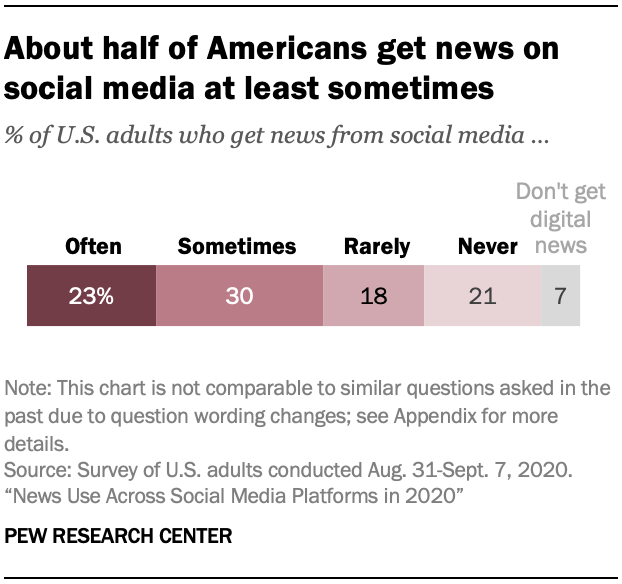
Recent research from the Pew Research Center indicates that approximately one-third of American adults routinely obtain their news from Facebook, as part of a broader study examining the evolving media environment in the United States. The updated report reveals that around 53% of U.S. adults report “often” or “sometimes” utilizing social media platforms for news consumption. While this usage is distributed across various sites, Facebook currently holds the leading position.
The study demonstrates that 36% of U.S. adults “regularly” turn to Facebook for news updates. This figure surpasses the percentage for nearly all other social media platforms, with YouTube being the notable exception, used regularly for news by 23% of U.S. adults.
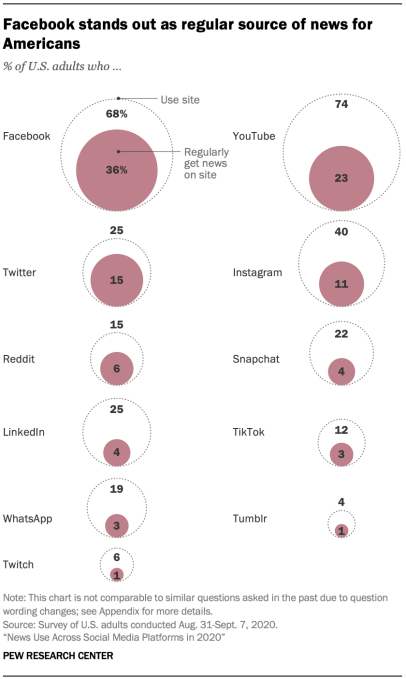
Usage percentages are considerably lower for other platforms. Twitter, formerly a favored communication channel for some, is used regularly for news by 15% of U.S. adults, according to the study’s findings.
Other social media sites demonstrate even smaller percentages. Approximately one in ten or fewer Americans report regularly obtaining news from platforms such as Instagram (11%), Reddit (6%), Snapchat (4%), LinkedIn (4%), TikTok (3%), WhatsApp (3%), Tumblr (1%), and Twitch (1%).
Pew Research Center notes that the lower percentages associated with these sites also reflect the fact that fewer Americans utilize these platforms overall.
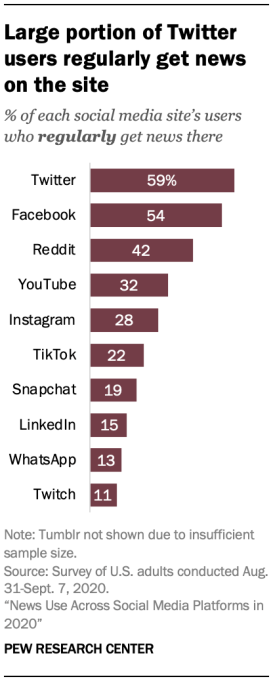
However, even with smaller audiences, these sites may have highly engaged news consumers. For example, 59% of Twitter users report getting news on the platform, compared to 54% of Facebook users, despite Twitter being used by only 25% of U.S. adults. Similarly, 42% of Reddit users regularly obtain news from the site, even though its overall user base is smaller than Facebook’s.
In essence, the ranking of “top news platforms” shifts when considering the proportion of a platform’s own users who regularly access news, rather than the total number of U.S. adults who do so.
Using this metric, Twitter, Facebook, and Reddit lead, followed by YouTube, Instagram, TikTok, Snapchat, LinkedIn, WhatsApp, and finally Twitch.
The demographic composition of social media news consumers was also examined by Pew. White adults constitute the majority of regular news users on platforms like Facebook and Reddit. Conversely, Black and Hispanic adults comprise approximately a quarter of Instagram’s regular users (22% and 27%, respectively). Facebook also demonstrates a skew toward female users (63% versus 35%) for regular news consumption, while Reddit skews toward male users (67% versus 29%).
Notably, despite the widespread use of social media for news, a majority (59%) of respondents believe the information found there is “largely inaccurate.” This perception has remained relatively consistent over the past few years, increasing from 57% in 2018 and remaining stable in 2019.
Furthermore, nearly half of social media users indicated that consuming news on these platforms has not significantly improved their understanding of current events.
This finding appears to contrast with reports suggesting that social media algorithms, by personalizing news based on user interests and beliefs, can contribute to online radicalization. Recent events, such as the storming of the U.S. Capitol by individuals influenced by misinformation and conspiracy theories, exemplify this concern.
However, it is important to remember that Pew’s study relies on self-reported data. Therefore, respondents may underestimate the subtle yet powerful influence of social media posts over time, even if they do not perceive a direct impact on their understanding of the news.
The Pew Research Center conducts these types of studies regularly. Last year, for instance, it reported that social media news consumers tend to be less informed and less engaged with factual information on key topics like the U.S. election and COVID-19, and are more likely to encounter fringe conspiracy theories.
The platforms themselves have taken limited action to combat the spread of misinformation, beyond implementing basic fact-checking measures. Facebook delayed banning QAnon groups for years, and even after a crackdown, many remained active, along with groups promoting “Stop the Steal” conspiracy theories.
The complete report is available here.
Related Posts

Peripheral Labs: Self-Driving Car Sensors Enhance Sports Fan Experience

YouTube Disputes Billboard Music Charts Data Usage

Oscars to Stream Exclusively on YouTube Starting in 2029

Warner Bros. Discovery Rejects Paramount Bid, Calls Offer 'Illusory'

WikiFlix: Netflix as it Might Have Been in 1923
