
Enable or Disable Auto Login in SUSE Linux - Quick Guide

Automating Login on Suse Linux
For users who find frequent login prompts inconvenient, Suse Linux offers a straightforward method to configure automatic login upon system startup. Conversely, this feature can be disabled to enhance system security.
Suse Linux distinguishes itself with a comprehensive suite of graphical administration tools. These tools empower users to manage system settings without relying on the command line interface. However, the sheer volume of available options can sometimes be overwhelming, particularly for those new to the operating system.
Accessing Login Settings
To access the automatic login settings, begin by clicking the green Suse "start" button. Then, utilize the search functionality by typing "user management." Select the appropriate option from the search results. Employing the search feature is often more efficient than navigating through complex menus.
Alternatively, if you are utilizing KDE-style menus, you can launch YaST. Within YaST, navigate to Security and Users, and subsequently select User Management.
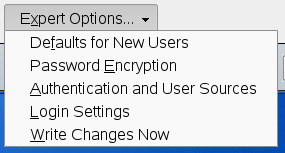
Click the "Expert Options" drop-down button. From the expanded menu, choose "Login Settings."
Enabling or Disabling Auto Login
The Login Settings panel allows you to either check or uncheck the "Auto Login" checkbox. You can also specify the user account that should be automatically logged in.
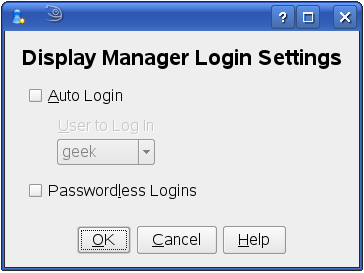
In this instance, the auto login feature was disabled. Prioritizing security is often preferable, especially given the infrequent need to reboot a Linux system.
Please note that these instructions are based on experience with Suse 10.2 utilizing the KDE desktop environment.