
Dija Launches in London with Backing from Blossom, Creandum & Index

Dija Launches in London with £20 Million Seed Funding
Grocery delivery startup Dija, based in London, has officially begun operations today, alongside the confirmation of a £20 million seed funding round secured in December. Initial reports regarding a partial closure of this round surfaced the previous month.
Investment Details and Market Competition
The company’s funding comes from Blossom Capital, Creandum, and Index Ventures, demonstrating investor confidence even before the official launch. Rumors within London’s venture capital circles suggest Dija may already be seeking further investment, potentially up to £100 million, as competition intensifies in the rapidly expanding “dark” grocery store sector.
Over recent months, numerous European startups have emerged, promising grocery and convenience item delivery within a timeframe of 10-15 minutes. This is achieved through the establishment of localized, delivery-focused fulfillment centers – often referred to as “dark stores” – and the direct employment of delivery personnel.
This full-stack approach aims to enhance supply chain efficiency and logistics, ultimately improving unit economics, though its viability remains to be fully established.
Recent Funding in the Sector
Berlin-based Flink recently announced a $52 million seed financing round, comprised of both equity and debt. The precise allocation between equity and debt wasn’t disclosed, but sources indicate an approximate 50/50 split.
Other key players in this space include Gorillas and Jiffy, both based in Berlin, alongside London’s Weezy and France’s Cajoo, all concentrating on delivering fresh produce and groceries. Zapp, currently operating in stealth mode, is also a contender, focusing on a potentially higher-margin convenience store model akin to the U.S. company goPuff. Notably, goPuff is also exploring expansion into Europe and is reportedly considering an acquisition or investment in the U.K.’s Fancy, often described as a smaller-scale goPuff.
Dija’s Operations and Founding Team
Founded by Alberto Menolascina and Yusuf Saban, both former senior leaders at Deliveroo, Dija has initiated operations in central London, guaranteeing delivery of groceries and convenience products within 10 minutes. Currently, hubs are located in South Kensington, Fulham, and Hackney, with plans to expand to 20 additional hubs covering central London and Zone 2 by summer.
Each hub stocks approximately 2,000 products, offered at “recommended retail prices.” A consistent delivery charge of £1.99 applies to each order.
Dija’s Competitive Strategy
“Our primary focus is on competing with the large supermarket chains that dominate the global $12 trillion industry,” states Dija’s Menolascina. “Beyond our speed and technology, our team’s experience in growing and disrupting this industry distinguishes us, including my and Yusuf’s experience building and scaling Deliveroo.”
Menolascina previously served as Director of Corporate Strategy and Development at Deliveroo, holding various positions prior to that. He also co-founded Everli, an Instacart-like grocery delivery service in Italy, and gained experience at Just Eat. Saban formerly held the position of Chief of Staff to the CEO at Deliveroo and also worked at Morgan Stanley.
Customer Behavior and Service Offering
During its initial soft launch, Menolascina observed that customers utilized the app for weekly grocery shopping, as well as for urgent needs and late-night purchases. “Dija addresses universal pain points and is designed to be accessible to everyone,” he explains. “We provide products at retail prices, delivered in 10 minutes, combining value and convenience. Dija is already proving to be a valuable resource for time-constrained parents working from home and homeschooling, for example.”
Industry Skepticism and Dija’s Response
Despite substantial investment in the sector, some venture capitalists have expressed skepticism regarding the feasibility of delivering fresh groceries with near-instant delivery. Concerns center around product perishability, lower margins, and potentially insufficient basket sizes to cover delivery costs.
Menolascina counters this skepticism, stating, “Almost everyone at Dija has industry experience and understands the intricacies of the business, from procurement and merchandising to data analysis and marketing. Furthermore, our full-stack model allows us to retain a larger portion of our margins. Average basket size varies based on customer needs, ranging from complete grocery shops to emergency purchases like diapers or batteries.”
Pricing and Future Growth
Regarding pricing, Menolascina clarifies that Dija purchases products at wholesale prices and sells them at recommended retail prices. “We have a clear roadmap for generating additional revenue through strategic partnerships, supply chain optimization, and technological advancements,” he adds.
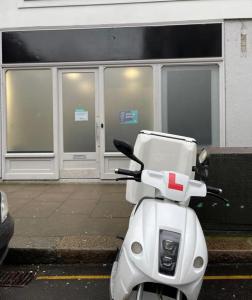
Prior to launching its own application, TechCrunch reports that Dija conducted several experiments on the Deliveroo platform, including the sale of convenience items like snacks and over-the-counter medications. Customers who previously ordered products from “Baby & Me Pharmacy” or “Valentine’s Vows” through Deliveroo may have unknowingly been shopping through Dija, as these brands operated from the same South Kensington location.
“Launching directly to consumers without thoroughly testing pick & pack processes carries significant risk,” Menolascina explained in a WhatsApp message a few weeks ago, confirming the Deliveroo trials. “We created temporary virtual brands solely to evaluate product selection, replenishment, picking, packing, and delivery procedures.”
Early Stage is a leading event designed for startup entrepreneurs and investors. Attendees gain valuable insights from successful founders and VCs on building businesses, securing funding, and managing portfolios. Sessions cover all aspects of company development, including fundraising, recruitment, sales, product-market fit, PR, marketing, and brand building, with dedicated time for audience questions and discussion.
Related Posts

Trump Media to Merge with Fusion Power Company TAE Technologies

Radiant Nuclear Secures $300M Funding for 1MW Reactor

Coursera and Udemy Merger: $2.5B Deal Announced

X Updates Terms, Countersues Over 'Twitter' Trademark

Slate EV Truck Reservations Top 150,000 Amidst Declining Interest
